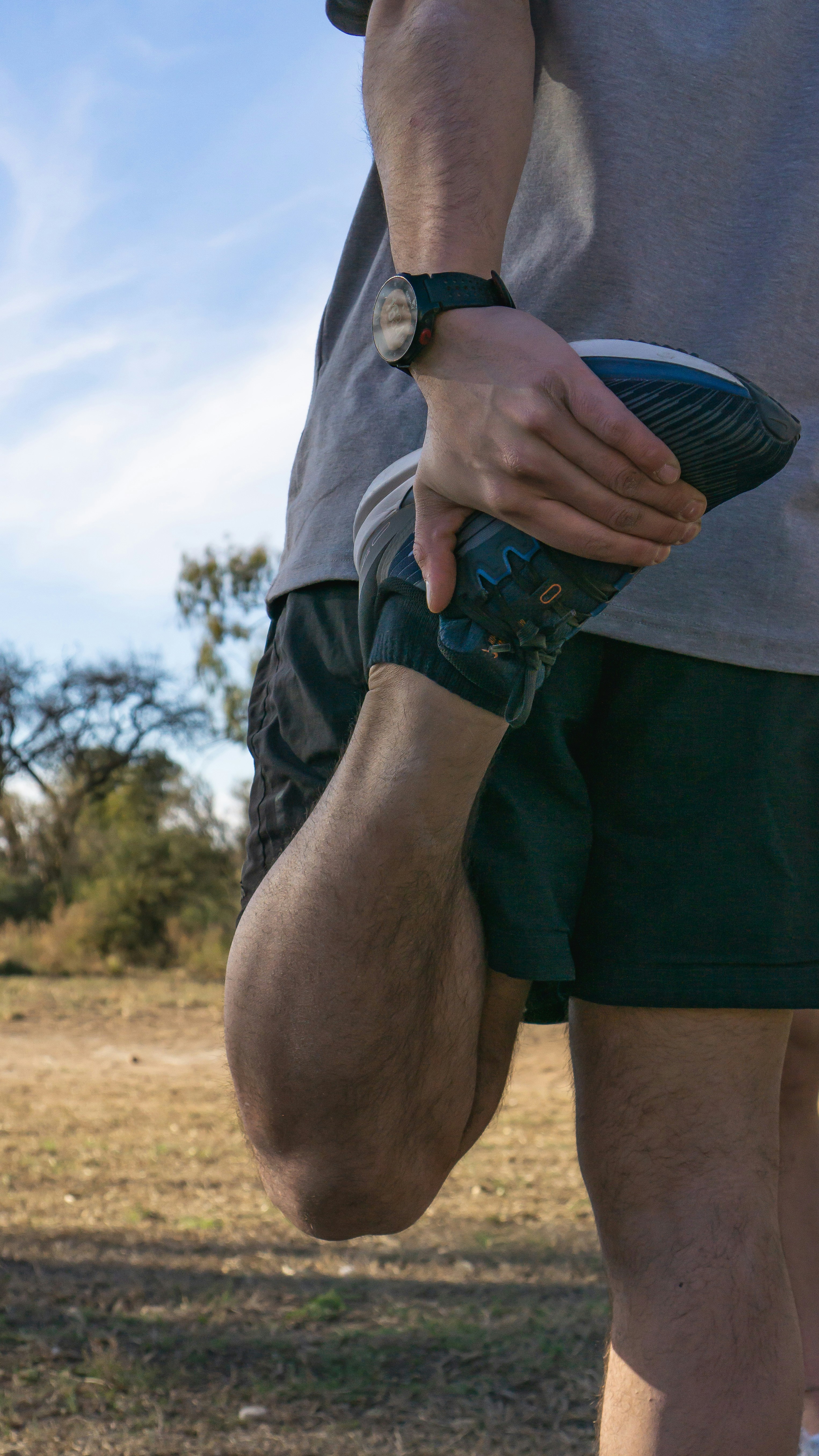
Injuries I commonly treat
- Running: shin splints, iliotibial band syndrome, runner's knee, plantar fasciitis, Achilles tendinopathy, hamstring and calf strains, hip pain
- Gym and strength training: shoulder, lower back, hip and elbow problems linked to lifting
- Team and racket sports: ankle sprains, knee pain, groin strains and overuse injuries
- Persistent niggles that settle with rest but return as soon as you train again
Gait and movement analysis
Pain is often where the problem shows up, not where it starts. Where it's helpful, I'll watch you walk or run and assess strength, mobility and control through the hip, knee, ankle and foot to find the movement faults feeding into your injury. Then we work on those, not only the sore spot.
Treatment and rehabilitation
- Soft tissue therapy and joint mobilisation to settle pain and restore movement
- Neuromuscular re-education to improve control and technique
- A progressive exercise programme matched to your sport and level
- Load management advice: what you can keep doing, what to modify and how to build back up. Complete rest is rarely the answer
- Pre- and post-event osteopathic maintenance for competitive athletes
Weightlifting and strength training
If you lift, I can assess your squat, deadlift and press mechanics, look at the shoulder, lower back and hip injuries that commonly affect lifters, and help you keep training consistently. We'll agree a return-to-lifting plan after injury so you rebuild load sensibly rather than guessing.
Getting back to sport
Returning too early is one of the commonest reasons injuries recur. I use how your body is functioning (pain, strength, movement quality and confidence) to guide progress, rather than just counting weeks.
Get urgent medical help if:
- You can't put weight on the limb after an injury, or there is obvious deformity or severe swelling
- You have a hot, swollen, painful calf, particularly after a long journey or period of inactivity
- You have chest pain or unusual breathlessness during exercise
Go to A&E or call 999 for severe or sudden symptoms, or 111 if you're unsure.
Ready to get started?
You don't need a GP referral. Same-day appointments are often available, with evening and weekend times.
Related care at Thistle Osteopathy
Back Pain & Sciatica
Acute and long-standing back pain, sciatica, disc-related and nerve pain.
Learn moreNeck Pain & Headaches
Neck pain, tension and neck-related headaches, whiplash, RSI and desk strain.
Learn moreClear, Straightforward Pricing
No hidden costs, no surprises, just transparent fees for thorough, unhurried care.
60 minutes
Includes a full case history, physical assessment, hands on treatment, and a personalised management plan.
Book First Appointment40 minutes
Ongoing, hands on treatment building on your management plan, with progress reviewed at every visit.
Book Follow-upPayment is due at the time of your appointment.
Frequently Asked Questions
Do I have to stop running while I'm being treated?
Not always. Many running injuries do better with modified training than with complete rest. Amir will tell you what is sensible for your injury, how much you can do and how to progress.
Can you help with an injury that keeps coming back?
Recurring injuries usually have a contributing factor, such as strength, mobility, technique or training load. Assessing those, not just treating the painful area, is how we aim to break the cycle.
Do you work with competitive athletes?
Yes. Amir treats recreational and competitive athletes, including pre- and post-event maintenance and injury management during training blocks.
What should I bring to my appointment?
Wear comfortable clothing you can move in. If your problem is running-related, bring the shoes you normally run in.
How much does a sports injury appointment cost?
The first appointment (60 minutes, including assessment and treatment) is £65. Follow-up appointments (40 minutes) are £60.